Junior Career Research Group ELEVATE (2025-2030)
Socio-ecological evaluation and design of unmanned aviation applications as a means of sustainable urban and urban-rural transport
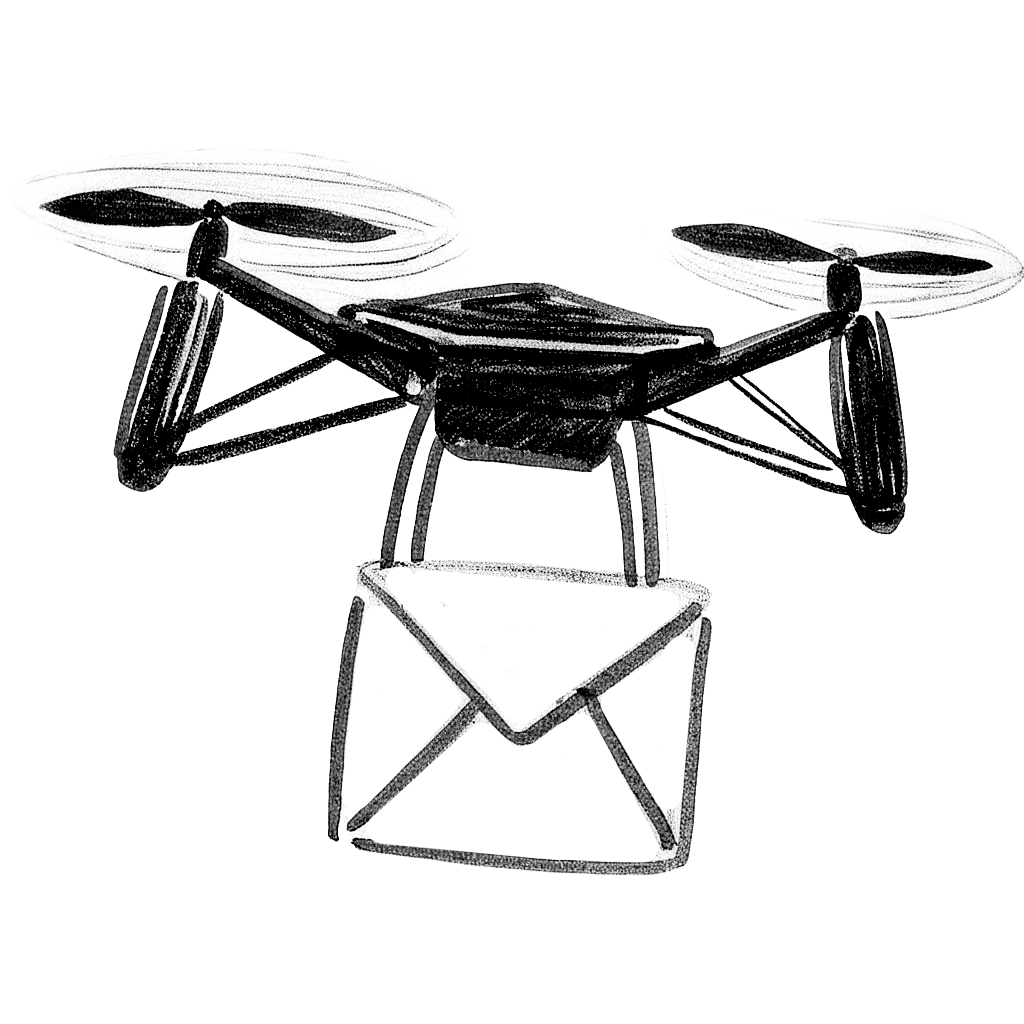
Unmanned aerial systems (drones) are expected to play a much larger role in transport and logistics in the future. This increases the need to manage low-altitude airspace as a public resource responsibly—environmentally sustainable, socially accepted, and politically legitimate.
The early-career research group ELEVATE explores how innovative aviation applications in the transport sector can be assessed from a socio-ecological perspective and developed in ways that make a real contribution to sustainable urban and urban–rural mobility. The focus is on automated and scalable drone-based logistics applications and their opportunities and risks—from efficiency potentials to issues such as noise, safety, and rebound effects.
ELEVATE combines interdisciplinary research with transdisciplinary collaboration: together with practitioners from public administration and industry in the Berlin–Brandenburg metropolitan region, the project tests participation formats, develops scenarios, and generates evidence-based guidance for policy, regulation, and planning. The project team brings together expertise in futures research, operations research, urban planning and development, as well as social-science research on mobility and technology.
The project is a collaboration between TU Berlin and the nexus Institute. nexus is responsible for the sub-projects “Airspace development as a field of discourse,” “Social acceptability and political participation in municipal airspace governance,” and “Urban-planning, infrastructural, and design integration.”
Collaborating Organisations
TU Berlin: Department of Work, Technology and Participation
The Department of Work, Technology and Participation is the department responsible for the pedagogic education of the discipline of economics, work and technology (in German: Wirtschaft-Arbeit-Technik, WAT). The goal of this discipline is to make the complex interaction between people, technology, society and nature understandable, interesting and attractive.
Cluster Mobility Research: Mobility and traffic are the core research cluster at the Department of Work, Technology and Participation. On the example of traffic and mobility we conduct research on infrastructures within the social and economic context they are embedded in. In a variety of projects we look for new and innovative solutions for the satisfaction of needs for (more) mobility). To do so we use methods of public engagement, development of scenarios and guidelines, analysis of constellations and comparative historical analysis.

nexus Institut

nexus designs and moderates participative processes: from complex citizen participation projects to multi-stakeholder formats. We design decision-making processes, focusing on transparent communication, active cooperation and sustainable consensus. nexus investigates how active citizenship and the participation of different actors can change social development. Therefore we realize application-oriented and practical research projects. nexus advises actors from politics and administration, develops concepts and strategies and evaluates processes and programmes. We optimise civil society infrastructures and services through individual solutions. Comprehensive needs analyses are the base for this. nexus works inter- and transdisciplinarily, locally, nationally and internationally on the topics of democracy and participation, sustainability, regional development, digitalization and health.
Funding
The Federal Ministry of Research, Technology and Space (BMFTR) is funding this project/initiative as part of the ‘Research for Sustainability’ (FONA) strategy.